
10 Ways to Make Any Space Feel Larger

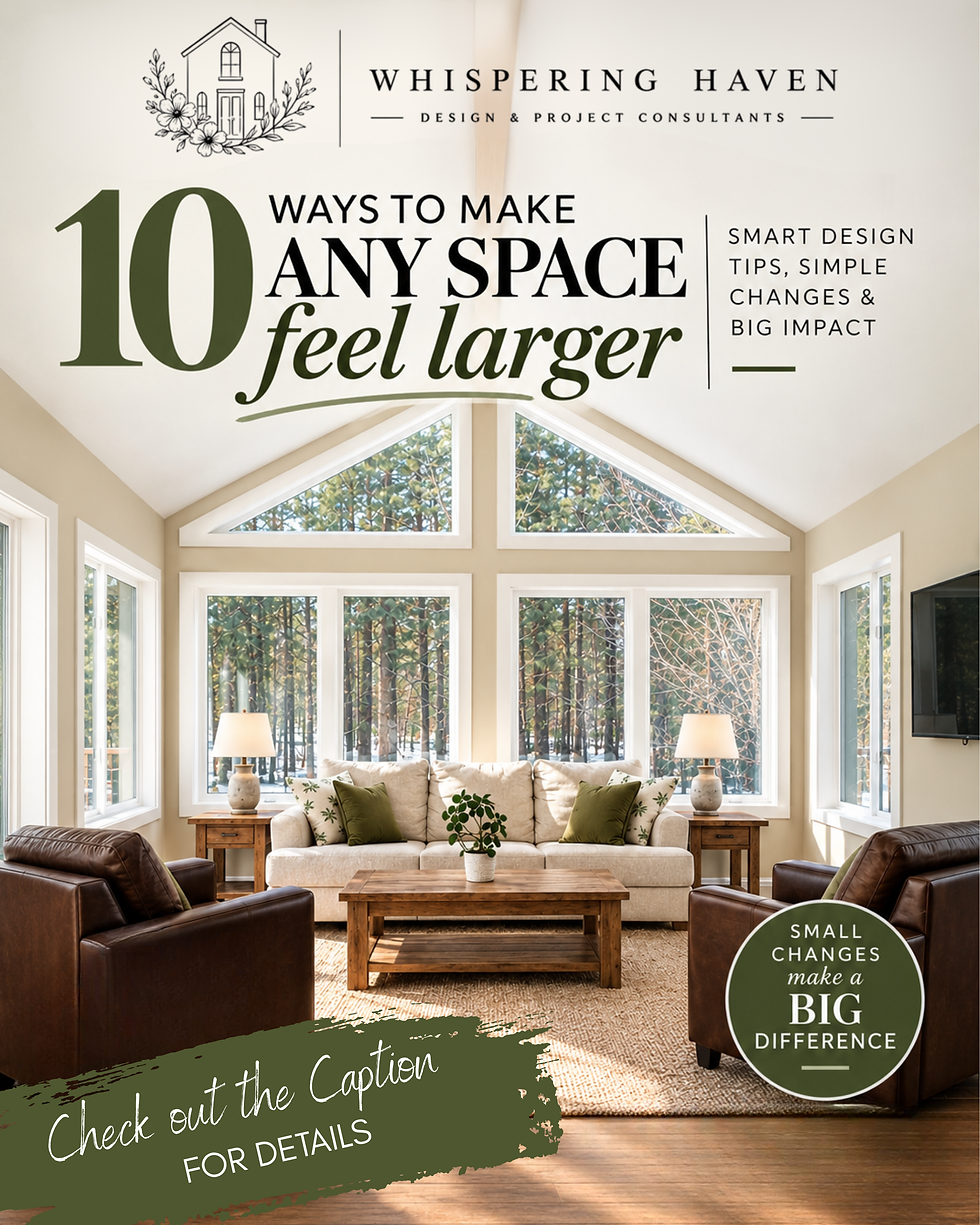
You don’t necessarily need more square footage to make your home feel more spacious.
Whether you’re working with a small kitchen, compact bathroom, narrow living room or simply a home that feels a little crowded, the right design decisions can completely change how a space feels.
The secret is creating better sightlines, less visual clutter, more light and a sense of continuity throughout the room.
Here are 10 practical ways to make almost any space feel larger — without adding a single square foot.
1. Choose a Light, Cohesive Colour Palette
One of the easiest ways to visually open up a room is to simplify the colour palette.
Light colours tend to reflect more natural light, helping a room feel brighter and more expansive. Warm whites, soft creams, light greiges and muted neutrals are all great options.
But that doesn’t mean every small room needs to be white.
The bigger consideration is continuity. Too many contrasting colours can visually divide a room into smaller sections. Keeping walls, trim, cabinetry and larger furnishings within a complementary palette allows your eye to move through the space more easily.
2. Maximize Natural Light
Natural light can completely transform how large a room feels. If there's room in the budget to replace existing windows with larger ones, this would be a beneficial upgrade for any space. However,
if you already have beautiful windows, avoid covering them with heavy curtains or bulky window treatments. Instead, consider woven shades, light-filtering blinds or simple curtains that can be pulled completely away from the glass.
Also look at what may be blocking the light inside the room. Tall furniture positioned beside a window, oversized décor or dark window coverings can make a room feel smaller than it actually is.
The more light you allow to travel throughout the space, the more open it will feel.
3. Hang Curtains Higher and Wider
This is one of those relatively small design changes that can have a surprisingly big impact. Instead of installing your curtain rod directly above the window frame, position it closer to the ceiling and extend it beyond each side of the window.
When the curtains are open, they should sit primarily beside the window rather than covering the glass.
This makes the window appear larger, allows more natural light into the room and draws your eye upward — creating the illusion of taller ceilings.
4. Choose Furniture That Fits the Room
Small room = tiny furniture, right?
Not necessarily.
Filling a room with several undersized pieces can actually make it feel busier and more cluttered. Instead, focus on choosing fewer pieces in the correct scale. Before purchasing furniture, consider the dimensions of the room, traffic patterns and the amount of space needed to comfortably move around each piece. And don't forget about depth. Choosing a 36-inch-deep sofa instead of a 42-inch-deep option, for example, can recover valuable floor space without sacrificing much seating.
Good space planning often makes a bigger difference than the actual size of the room.
5. Show More of the Floor
The more flooring you can see, the more spacious a room tends to feel.
Furniture with exposed legs creates visual space underneath, making pieces appear lighter and less bulky.
You can use the same principle throughout your home with:
Floating bathroom vanities
Wall-mounted nightstands
Leggy sofas and chairs
Open-base coffee tables
Floating consoles
Raised cabinetry
Even though the furniture occupies the same general area, seeing underneath it creates the perception of additional space.
6. Use Mirrors Strategically
Yes, mirrors really can make a room feel larger — but placement matters.
Instead of simply hanging a mirror wherever you have an empty wall, think about what the mirror will reflect. Placing one opposite or adjacent to a window can bounce natural light deeper into the room. A large mirror reflecting an open doorway or another attractive area can also create a greater sense of depth.
Larger mirrors are often more effective than grouping several small ones because they create fewer visual interruptions.
7. Reduce Visual Clutter
Sometimes a room isn't actually too small — there's simply too much competing for your attention.
Look around and consider how many individual objects your eye has to process. Small décor pieces, crowded shelves, exposed storage, countertop appliances, multiple furniture pieces and busy patterns can quickly make a room feel smaller.
Try removing a few things rather than immediately adding something new. Choose one larger piece of artwork instead of several small pieces. Leave some shelves partially empty. Keep countertops relatively clear. Incorporate closed storage where possible.
Empty space is part of good design, but you don't want too much empty space. Giving objects room to breathe can make the entire room feel calmer and larger.
8. Create Clear Sightlines
Where you position furniture can dramatically affect your perception of a room. If a large sofa, cabinet or tall piece of furniture blocks your view when you enter, your eye immediately registers a stopping point.
Instead, try to maintain clear sightlines through the room and, where possible, into adjoining spaces.
You can also create better flow by keeping natural walking paths clear. You shouldn't have to weave around furniture to move from one side of the room to another.
When your eye — and your body — can travel easily through a space, the room naturally feels more generous.
9. Create Continuity Between Spaces
If you want your entire home to feel larger, don't design every room as though it exists independently.
Repeating flooring, colours, wood tones and finishes throughout adjoining rooms creates a visual connection between them. This is especially effective in open-concept homes or smaller houses where you can see several spaces at once.
For example, continuing the same flooring from your kitchen into your dining and living areas eliminates obvious visual boundaries. Suddenly, instead of seeing three separate areas, your eye reads them as one larger connected space. The same concept applies to bathrooms. Larger-format tile with fewer grout lines can create a cleaner, less visually interrupted surface.
10. Draw the Eye Up
When you can't make a room physically wider, emphasize its height. Floor-to-ceiling curtains are one option, but there are plenty of others. Take kitchen cabinetry to the ceiling. Install vertical wall panelling. Hang artwork slightly higher. Use tall bookcases. Carry bathroom tile all the way to the ceiling. You can also choose lower-profile furniture. A lower sofa or bed leaves more visible wall above it, which can make the ceiling feel higher.
The goal is to create vertical lines that encourage your eye to travel upward rather than stopping halfway up the wall.
A Larger-Feeling Home Starts With Better Planning
Making a space feel larger isn't about following one magic design rule. It's usually the result of several thoughtful decisions working together.
More natural light. Better furniture placement. Clearer sightlines. Less visual clutter. Consistent materials. And furniture that's actually appropriate for the room.
Before assuming your home needs more square footage, take another look at how you're using the space you already have. Sometimes a different layout, better storage or a few intentional design changes are enough to completely transform how a room looks and feels.
At Whispering Haven Design & Project Consultants, we help homeowners make thoughtful design and renovation decisions before construction begins — from space planning and layouts to selections, renderings and renovation planning.
Because good design isn't simply about making a space look beautiful.
It's about making the space you have work better for the way you live.
Interested in learning more about how to maximize small spaces? Check out Small Kitchen Storage Ideas: The Ultimate Guide to Maximizing Every Inch of Your Kitchen

Comments